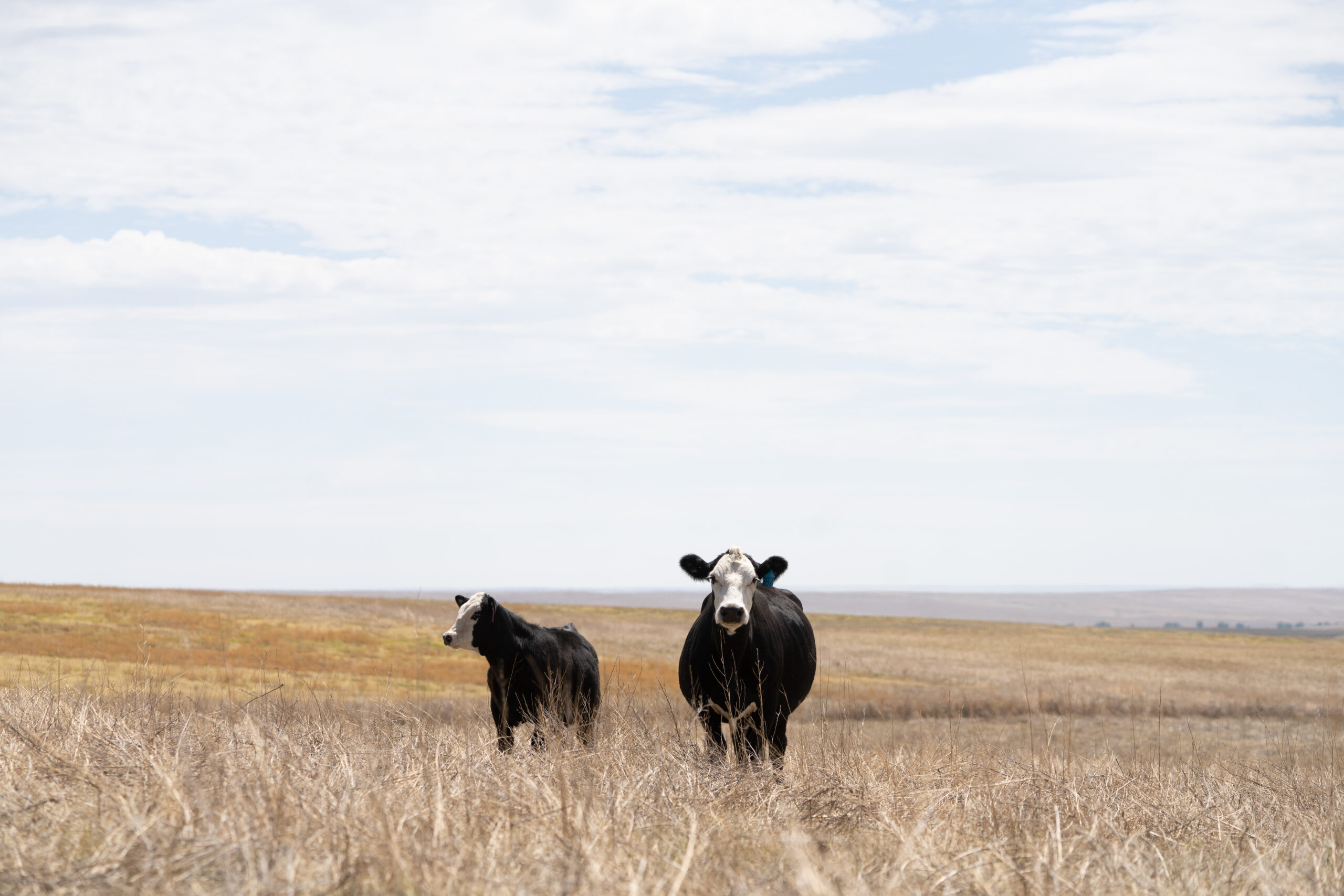
June 11, 2026
Ongoing research underscores the Hereford advantage.
Crossbreeding and Hereford cattle have gone together ever since the breed first came to the U.S. in 1817 to improve the nation’s native cattle herd.
Specific benefits from direct and maternal heterosis are well documented, too, with much of the seminal research conducted at the Meat Animal Research Center (MARC) in the 1960s.
What continues to evolve, however, is quantifying the magnitude of advantages associated with utilizing Hereford genetics in strategic, complementary crossbreeding. That’s the goal of the American Hereford Association’s (AHA) ongoing multi-year collaborative research with the University of Illinois Urbana-Champaign (UIUC).
More specifically, Dan Shike, interim head of the UIUC department of animal sciences explains, “The objective is to characterize the performance of Hereford genetics in a commercial Angus operation that retains replacements and finishes out all steer progeny.”
Results from the project thus far serve as a literal textbook example of the production and economic power yielded by maternal heterosis. Hereford-sired females, compared to those bred to Angus bulls, were more moderate in size, consumed less feed, weaned more calves, bred back more efficiently and had increased longevity.
For context, the study began with 600 commercial Angus cows. Half were bred to six different Hereford bulls; the other half to Angus bulls. All bulls used represented the top 15% of each breed for it maternal and terminal indexes. This is a fall-calving herd.
Although the results are expected, the differences underscore the significant advantages enabled by Hereford genetics and maternal heterosis.
Shane Bedwell, AHA chief operations officer and director of breed improvement, pointed out during the Forum that Hereford provide additional heterosis due to the fact they are the least related of the Bos Taurus breeds, as documented by MARC.
Winning for the long haul
“I’m not looking for the cow that wins in one year. I’m looking for the cow that wins over her lifetime and stays in the herd, stays in production, because she has some built-in fertility, some resilience, which leads to longevity,” Shike says.
Although the advantages of maternal heterosis are noteworthy each year of reproduction, Shike notes how brightly they shine for the 2-year-olds with a heifer at side (Table 2), which breed back on time for the next calf. As cattle producers have long-known, that’s when so many expensive replacement females are lost, unable to breed back with their second calf at one of the most stressful developmental periods of their lives.
Considering the 14% advantage in first-calf weaning rate of the Hereford-sired females at 2 years of age, Shike explains, “In a 100-head cow herd, that’s 14 more calves. If you put a $2,000 price tag on each weaned calf, that’s $28,000. That’s $280 more per cow. That’s a lot of dollars.”
That’s before considering that Hereford-sired females needed fewer groceries. Pricing hay at $150 per ton, the advantage equates to about $90 less feed cost per cow per year, according to the data.
Shike added context by pointing out, “Seventy percent of the feed resources in the beef industry go to the cow herd, and 70% of that feed that goes to the cow herd goes to her maintenance. Multiply those two numbers. It’s 0.49. I’m going to round that to 50%. Half of the feed in the beef industry goes to just maintaining the cow, and I haven’t produced anything.”
Bottom line, Shike explained, “They wean more calves, and more of them breed back. That’s Hereford genetics, that’s maternal heterosis.”
Perhaps unsurprising, given the Angus breed’s relentless pursuit of pounds and marbling, the Angus-sired steers in the project resulted in heavier carcasses and graded higher on average. For instance, based on a subset, the Hereford-sired hot carcass weight was 876 pounds, compared to 901 pounds for Angus-sired steers. Marbling score for Hereford-sired steers averaged 479 versus 557 for the Angus-sired steers. Ribeye area was the same for both groups at 14.1 square inches.
Bedwell cautions the data is also influenced by the unique management system employed at the university of Illinois. Calves are weaned at about 90 days of age and moved to a backgrounding facility.
Think about the reproductive efficiency in the Hereford-sired heifers and cows versus heavier weights in the Angus-sired ones. Greg Thoma, AgNext director for agricultural modeling and lifecycle assessment, used the data to conduct a lifecycle assessment for a 1,000-head operation over 10 years. Generally speaking, the model considered a 1,000-cow commercial Angus herd using Hereford bulls and retaining its own replacement heifers or using Angus bulls and retaining its own replacement heifers.
More weaned calves over time yielded 45,728 more pounds of steers and open heifers to sell in the herd utilizing Hereford bulls.
“The feedlot side of the business pays the bills, but the female side keeps us in the business,” Shike says.
Based on preliminary AgNext results, carbon intensity was also 8% less in the modeled herd employing Hereford bulls.
“Achieving the performance metrics documented for the Hereford breed in this trial by any means – genetic or management — shows clear benefits,” Thoma says.
